


There is considerable attention on the technologies expected to shape the next generation of shipbuilding. Artificial intelligence, automation, digital twins and connected digital environments are all creating opportunities to improve how vessels are designed, built and maintained.
For an industry facing growing demands for productivity and capacity, these developments are understandably attracting significant interest. Yet the availability of new technology is only one part of the challenge. Introducing it into an operating shipyard, with established processes, existing systems and vessels already under construction, is another matter entirely.
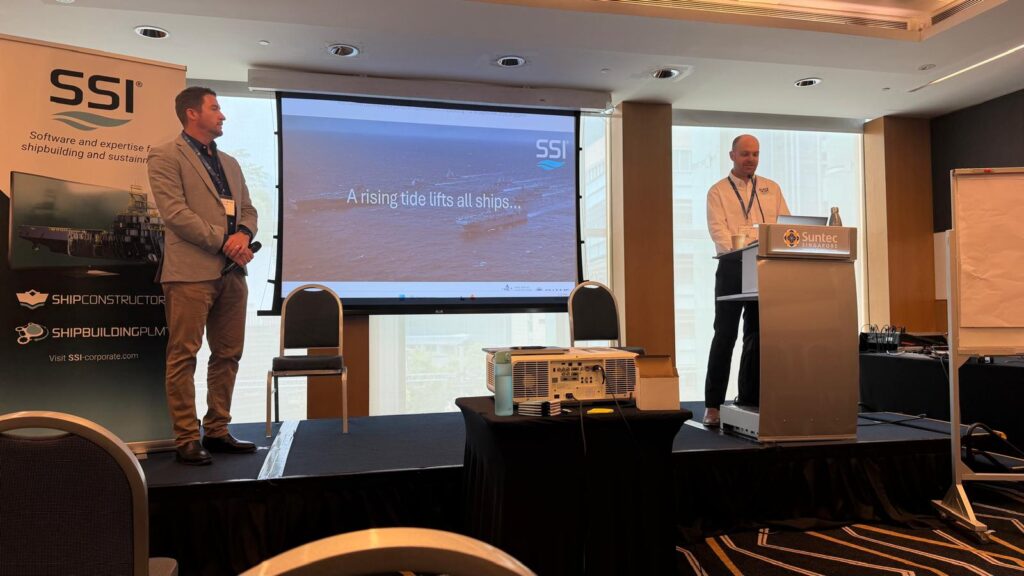
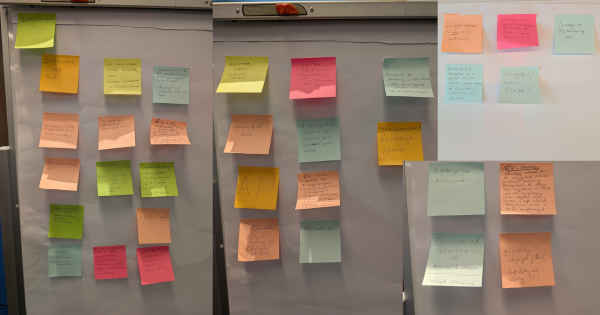
This distinction became apparent during discussions with shipbuilding professionals at ICCAS 2026 in Singapore about the future of digital transformation. When asked which technologies would have the greatest impact over the next two to three years, participants identified everything from robotic welding and manufacturing digital twins to standardised data exchange and the continuous digital thread.
However, when the discussion turned to what was preventing shipyards from making progress, the responses were markedly different. Disconnected departments, workforce capability, organisational change, investment, cybersecurity and a lack of coherent strategy featured prominently.
It was a useful reminder that the technologies attracting the most attention are not necessarily where the industry’s most pressing challenges lie.
The Perception of Digital Transformation Doesn’t Always Match Reality
Much of the conversation surrounding digital transformation focuses on what has been achieved. Industry publications and conferences regularly highlight successful implementations, new capabilities and examples of shipyards moving towards increasingly connected operations.
There is considerable value in sharing these experiences. However, they rarely convey the full complexity of introducing new technology into an established shipbuilding environment. A shipyard cannot simply suspend production while it modernises its systems. Existing programmes must continue, delivery commitments remain and the people responsible for implementing new processes are often the same people managing day-to-day operations.
There is also a tendency to compare progress against what other organisations appear to have achieved. When success stories dominate the discussion, it becomes easy to assume that other shipyards are further along in their digital transformation than they actually are. This can create pressure to accelerate investment or introduce new capabilities before the organisation has established how they will fit into its wider operations.
During the industry discussions, participants identified rushed decisions and the absence of an overall vision among the barriers to transformation. Both reflect the difficulties that can arise when technology adoption moves ahead of the strategy intended to support it.
The challenge is not to keep pace with every new development, but to understand which changes will make a meaningful difference to the shipyard and establish a realistic path towards implementing them.
Technology Has to Work Across the Entire Shipyard
One of the more revealing aspects of the discussions was the emphasis placed on organisational barriers.
Disconnected departments, management alignment, workforce capability and cultural resistance were all raised as challenges. These are familiar issues in an industry where different disciplines have traditionally developed their own processes and systems to meet specific operational requirements. Engineering, planning, procurement and production may work with different information and have different immediate priorities, but their activities are closely connected.
Consider the introduction of a new engineering system that improves the speed or accuracy of design work. That improvement has clear value within engineering. However, if production planning cannot use the resulting information without additional interpretation, conversion or manual rework, much of the potential benefit is lost. The same applies when production teams make practical changes during construction that are not adequately captured and communicated back through the design and information management processes.
In both cases, individual departments may be working effectively within their own environments while the shipyard continues to experience inefficiencies between them. This is why digital transformation cannot be approached solely as a series of departmental technology projects. The relationships between processes are just as important as the capabilities of the systems themselves.
It also explains why organisational change can be difficult. Established working practices often reflect years of experience and adaptation to the realities of shipyard production. Introducing new technology without understanding why those practices exist can create resistance or unintended consequences.
The knowledge held by experienced designers, planners and production personnel should be part of the transformation process. Their understanding of how work is actually carried out is essential when determining which processes should change, which should be retained and where digital tools can provide genuine improvements.

The Information Challenge Behind a Connected Shipyard
Alongside AI and automation, participants identified standardised exchange formats, further digitisation of information and the continuous digital thread as important developments for the industry. These priorities are closely related. As shipbuilding programmes become more collaborative, the ability to use information created outside the shipyard’s own systems is becoming increasingly important.
A vessel may be designed by one organisation, adapted by another and constructed by a shipyard with its own established engineering and production environment. Suppliers and subcontractors contribute further information, often using different tools and formats. The receiving shipyard must bring these inputs together while maintaining control of the vessel’s configuration and the information required to build it. This is particularly evident when working with third-party designs.
A shipyard may receive an established vessel design containing CAD models, drawings, equipment lists, supplier documentation and other project information. Some of that information may be ready for immediate use, while other elements require modification or additional detail to support local production requirements.
It is tempting to treat this primarily as a CAD conversion problem. If the information can be transferred into the shipyard’s preferred software, the assumption is that the integration challenge has been resolved. In practice, converting geometry is only one part of the process. The shipyard must still determine which information is authoritative, how revisions are controlled, what changes have been approved and how those changes affect downstream activities.
A revised equipment specification, for example, may have implications for procurement, weight control, production planning and technical documentation. Managing those implications requires more than transferring a model between software platforms. It requires an information structure that maintains traceability as data moves between organisations, systems and stages of construction.
Standardised exchange formats can make this process easier, but they cannot eliminate the differences between shipyards, their production methods or their programme requirements.
The objective is not necessarily to make every organisation use the same software. It is to ensure that the information they produce can be understood, managed and used by the people who need it.
This is also an important consideration for emerging technologies. AI, automation and digital twins depend on the availability of reliable information. Where data remains fragmented or difficult to interpret, introducing more advanced technology may do little to address the underlying problem.
Progress Doesn’t Require Replacing Everything
The challenges identified during the discussions also reinforce the importance of taking a practical approach to transformation. For a shipyard with established systems and active construction programmes, replacing an entire technology environment can involve substantial cost, disruption and risk. Even where a new platform offers clear technical advantages, the effort required to migrate information, retrain personnel and adapt existing processes needs to be considered.
There are circumstances where comprehensive changes are justified. However, they should not be treated as the default approach. Working with third-party design information provides a useful example of how different strategies can be applied.
A shipyard receiving a proven vessel design may not need to recreate the entire model within its preferred CAD environment before downstream work can begin. It may be more practical to bring the existing information under appropriate control, establish a reliable baseline and make it available to the teams responsible for engineering, planning and production.
Where specific systems or areas of the vessel require modification, those elements can be converted or developed further within the shipyard’s established tools. For a series build or a programme involving substantial design variation, a more comprehensive conversion may provide greater long-term value. The appropriate approach depends on how the information will be used, the extent of the changes required and the benefits that deeper integration can provide.
Similar decisions arise throughout digital transformation. A shipyard may achieve worthwhile improvements by connecting two existing systems, establishing more consistent information management practices or reducing the manual transfer of data between departments. These changes are less visible than the introduction of an entirely new technology platform, but they can address problems that affect everyday operations. They also provide an opportunity to develop internal capability and understand the impact of new processes before extending them across the organisation.
A Strategy Must Account for the People Delivering It
Another point raised during the discussions was the difficulty of translating a digital transformation strategy into practical change. A long-term technology roadmap may establish a direction, but implementing it requires sustained commitment from management and the people working across the shipyard.
Investment decisions must account for more than software acquisition. Training, process development, technical expertise and the time required to introduce new working practices all influence whether an implementation succeeds. This is particularly important in shipbuilding, where experienced personnel often carry considerable knowledge of how designs are developed, production is organised and problems are resolved.
That experience cannot always be captured in a procedure or transferred automatically into a new system. A successful transformation programme needs to involve those personnel in determining how technology will be used. It must also provide opportunities for employees to develop the skills needed to work effectively within the new environment. The strategy itself should remain connected to operational priorities.
Whether the objective is to reduce rework, improve production readiness, strengthen configuration management or make information more accessible, the expected improvement needs to be understood by the people responsible for delivering it. Without that connection, digital transformation risks becoming a collection of technology initiatives rather than a coordinated effort to improve shipbuilding performance.
Building on What Already Works
The technologies available to shipbuilders will continue to develop. AI, automation and increasingly connected digital environments are likely to play a growing role in how vessels are designed and constructed. The industry discussions demonstrated both the interest in these capabilities and the practical challenges surrounding their adoption.
Perhaps the most important observation is that many of those challenges are not new. Shipyards have long needed to coordinate information across disciplines, manage changes, develop workforce capability and balance investment against operational demands. Digital technology creates opportunities to address these issues more effectively, but it does not remove the need to understand them. For shipyards considering their next steps, there is value in examining the systems and processes already in place before deciding what needs to be replaced.
Some may continue to serve the organisation well. Others may require better integration, more consistent information management or changes to the way work is carried out. The task is to identify where those improvements will have the greatest impact and introduce them in a way that supports existing programmes while preparing the shipyard for future requirements. Digital transformation should ultimately make shipbuilding more effective, not simply more digital.
That progress does not have to begin with a new technology platform or a complete redesign of established processes. It can begin by making better use of the information, systems and expertise a shipyard already has.