


Challenges
- Increasing vessel complexity
- Tighter delivery timelines
- Limitations of 2D, document-centric workflows in production design
Solutions
- Incremental transition to model-based production design
- Practical workflows aligned with real shipyard processes
Products Used
- ShipConstructor (structure, piping, outfitting)
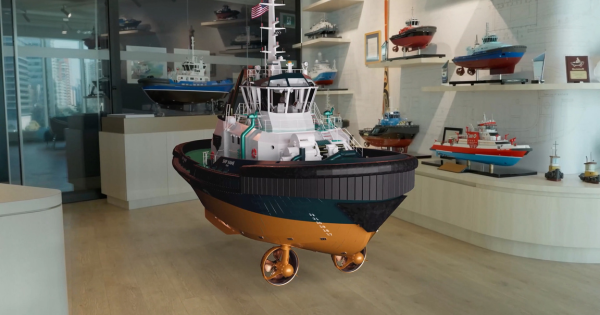
For more than 35 years, SSI and Robert Allan Ltd. have worked together to modernize ship design in a way that respects how shipbuilding actually works. Rather than forcing disruptive change, the partnership focused on practical, production-ready workflows — helping teams transition from 2D drawings to coordinated 3D models that improve buildability, collaboration, and delivery timelines.
Using ShipConstructor as a digital foundation, Robert Allan embedded model-based design into everyday production work, enabling clearer communication with shipyards and reducing risk as vessel complexity increased. This included transitioning from document-centric workflows, establishing a single source of truth, supporting distributed collaboration, and laying the foundation for AI-driven capabilities in the future.
Every week, somewhere in the world, at least one new vessel designed by Robert Allan Ltd. enters service.
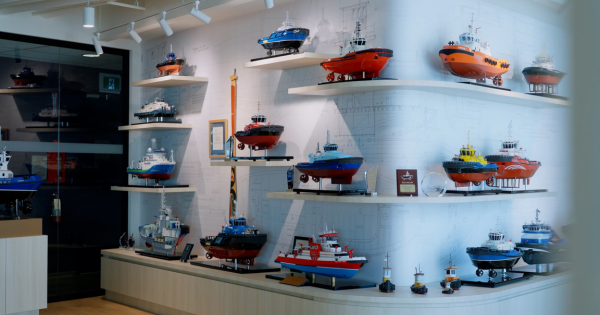
“With SSI, I see a future with more parametric design features. There are some now, but I think that the use of AI and parametric design will allow us to really streamline the design process.“
Jim Hyslop, Director of Project Development, Robert Allan.
The Challenge: Modernizing Design Without Breaking Proven Shipbuilding Practices
As vessel designs grew more complex and schedules tightened, shipyards increasingly needed clearer, build-ready information earlier in the process. At the same time, established shipbuilding practices could not simply be replaced overnight.
Traditional 2D, document-based workflows made it harder to assess constructability early, manage design changes, and communicate intent consistently once designs reached the yard.
Robert Allan needed a practical path forward — one that:
- Improved production without disrupting proven workflows
- Reduced interpretation and ambiguity during production
- Supported closer collaboration with shipyards
- Compressed timelines without increasing risk
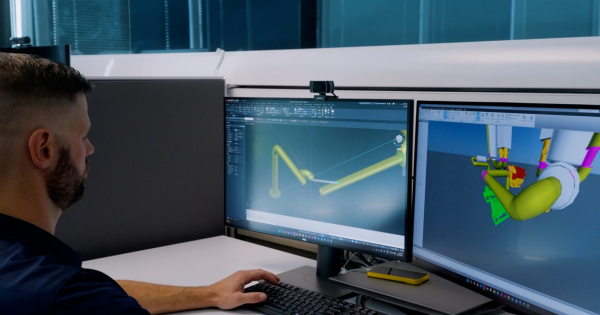
“My work personally right now with Robert Allan is probably 90 percent 3D.”
– Matthew Malloy, Piping Production Lead, Robert Allan
The Solution: A Practical Transition to Model-Based Production Design
Robert Allan adopted ShipConstructor as the foundation of its production design workflow, embedding 3D, model-based design across structural, piping, and outfitting disciplines.
Rather than treating 3D as a standalone capability, ShipConstructor was integrated incrementally into existing processes. Shared models became a single source of truth, enabling earlier interference detection, better access reviews, and clearer coordination with shipyards, all without forcing radical changes to how teams worked.
This approach allowed designers to focus on buildability first, while naturally evolving from 2D methods to coordinated 3D production models. Secondary benefits included cloud and distributed collaboration, improved data structuring to support future AI initiatives, and smoother cross-team coordination.
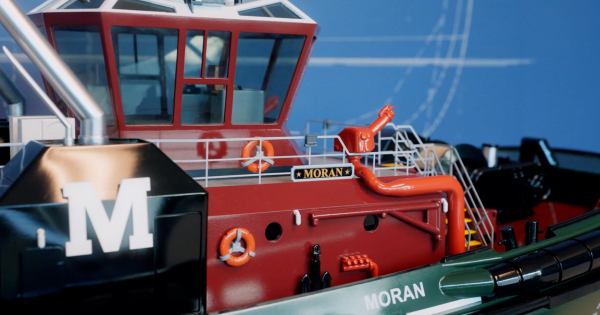
“ShipConstructor was a huge part of my career development. When I started my career, we did everything in 2D. Then, ShipConstructor was introduced to our design goal flow and it became so much easier. So much faster.“
– Dmitry Kapiturov, Director of Production Design, Robert Allan
The Results: Faster, Clearer, and More Buildable Outcomes
By standardizing on ShipConstructor, Robert Allan achieved tangible improvements across projects:
- Shorter production timelines, with structural design phases often reduced significantly depending on vessel size
- Improved constructability, through earlier visibility into interferences and access constraints
- Cleaner production deliverables, including clear assembly and spool drawings generated directly from the model
- Stronger shipyard collaboration, supported by shared models and structured reviews
These gains helped shipyards build more efficiently while reducing risk during construction.
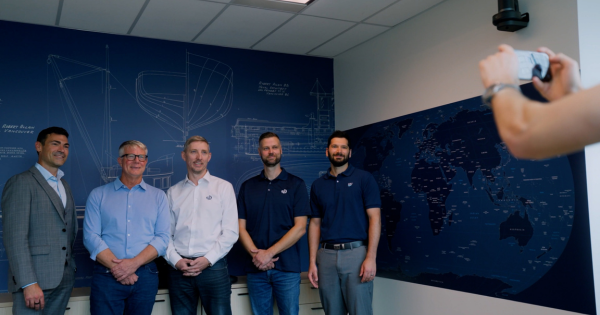
“The uniqueness is our collaborative approach, mutual respect and the ability to actually push each other to achieve.”
– Denis Morais, CEO, SSI
A Long-Term Partnership Built on Trust and Collaboration
Beyond technology, the SSI–Robert Allan relationship has been defined by long-term collaboration and responsiveness.
“ShipConstructor has always been responsive to our needs,” notes Jim Hyslop, Director of Project Development at Robert Allan Ltd. “That responsiveness allows us to deliver designs that are clean, accurate, efficient, and easy to build.”
For Denis Morais, CEO of SSI, the strength of the partnership comes from shared learning over time: a commitment to evolving tools and workflows together, guided by real shipbuilding experience.
As the industry continues its shift toward model-based and data-driven design, SSI and Robert Allan remain aligned on a simple goal: enabling smarter, more buildable ships without disrupting the realities of shipyard production.
About Robert Allan Ltd.
Robert Allan Ltd. is an independent naval architecture and marine engineering firm based in Vancouver, Canada. Founded in 1928, the company is internationally recognized for designing high-performance commercial vessels, including tugboats, fireboats, research vessels, and specialized workboats. The firm is known for practical, buildable designs that balance innovation with real-world operational needs.
Learn more about how ShipConstructor supports practical, production-ready shipbuilding workflows.